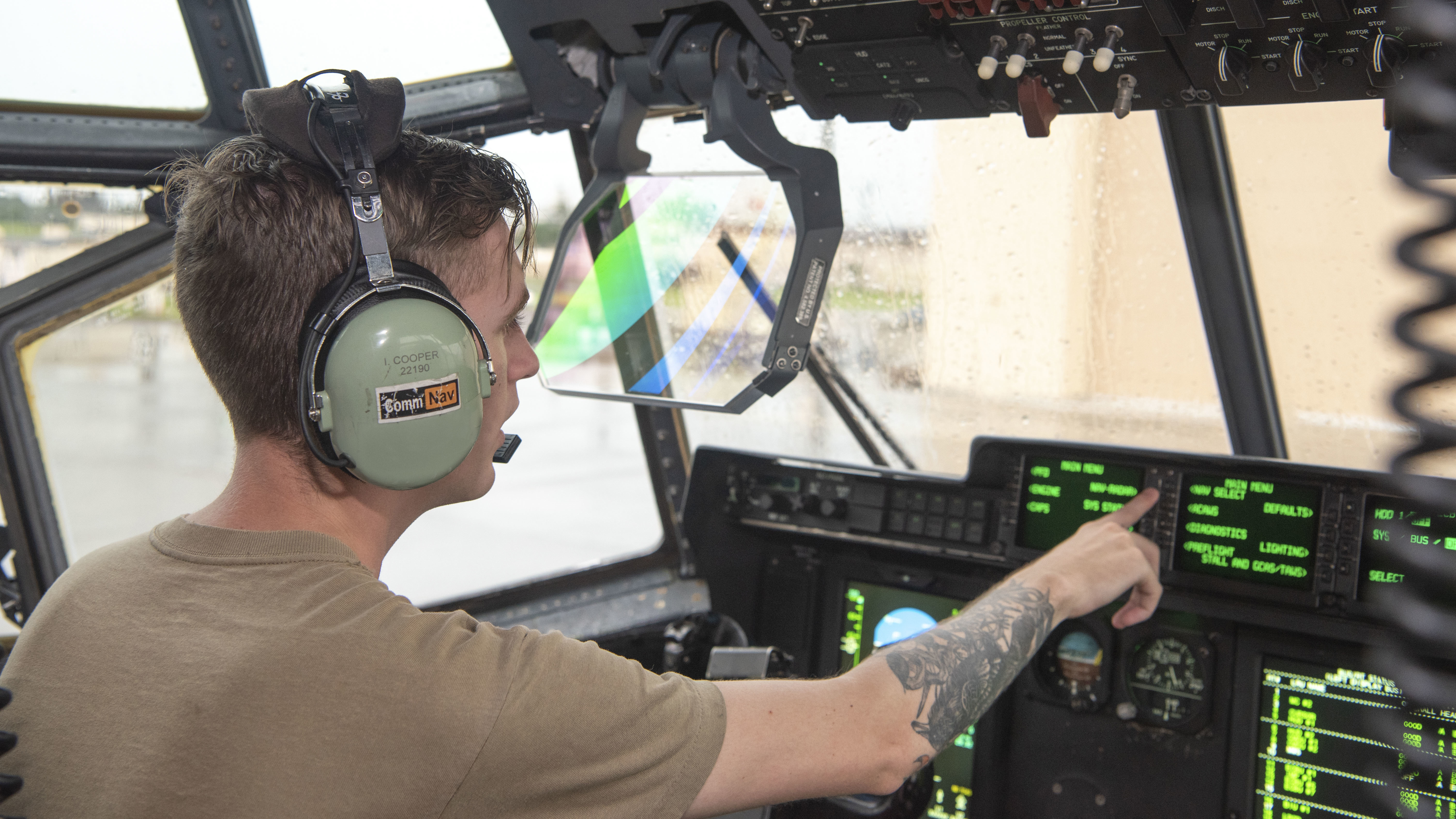
Pilots used to be mechanics in the sky. If you look at the flight deck of an old Boeing 707, it’s a terrifying wall of "steam gauges"—hundreds of individual clocks, needles, and circular dials that each did exactly one thing. If a hydraulic pressure sensor failed, the needle dropped, and the pilot had to mentally map that failure to every other system. It was exhausting. Today, heavy aircraft integrated avionics have basically turned the cockpit into a high-speed data center. Everything talks to everything.
It’s not just about pretty screens. It’s about sensor fusion.
When we talk about "heavy" aircraft, we’re looking at the big players: the Airbus A350, the Boeing 787 Dreamliner, and the massive C-17 Globemaster III. These machines are too complex for a human to manage via manual knobs. Integrated Modular Avionics (IMA) is the backbone here. Instead of having fifty separate boxes for fifty different functions, IMA uses a centralized network of high-performance computing modules.
Think of it like the transition from a bag full of gadgets—a camera, a Walkman, a GPS, and a phone—to a single iPhone. Everything shares the same processor and the same power supply. It’s efficient, but it also creates a single point of failure that engineers have to obsess over.
The Shift from Federated Systems to IMA
For decades, aviation used "federated" architecture. If you wanted a new weather radar, you bought a specific radar box, bolted it in, and ran dedicated wires to a dedicated display. It was heavy. It was a nightmare to maintain. Honestly, it was just clunky.
Heavy aircraft integrated avionics changed the game by introducing the ARINC 664 standard, often called AFDX (Avionics Full-Duplex Switched Ethernet). This is basically a hardened, super-reliable version of the internet cables you have in your house. Because everything is on one network, the plane’s weight drops by hundreds, sometimes thousands of pounds. That’s more room for fuel or cargo.
Honeywell and Thales are the titans here. Their systems don't just show altitude; they synthesize data. If an engine is overheating on a 787, the avionics suite doesn't just ring a bell. It cross-references the flight plan, checks the nearest diversion airports, and highlights the emergency checklist on the primary display.
💡 You might also like: Lateral Area Formula Cylinder: Why You’re Probably Overcomplicating It
Why Weight is the Real Enemy
Every pound of wiring in a heavy jet costs money. In a massive airframe, you might have thirty miles of copper. By moving to an integrated system, you replace bundles of copper with fiber optics or lightweight Ethernet.
But there’s a catch. When you put all your eggs in one basket—or all your software on one processor—you need "partitioning." This is a concept where the flight controls are digitally walled off from the "coffee machine" or the passenger entertainment system. You don't want a bug in the in-flight movie system crashing the autopilot. The DO-178C standard ensures this software separation is ironclad. It’s why your phone crashes once a week but a Boeing flight computer hasn't crashed in thirty years.
The Glass Cockpit is Lying to You (Sort Of)
What a pilot sees on those massive 15-inch LCDs is a lie. Well, it’s a "synthetic" reality. In the past, if there was fog, you couldn't see. Now, heavy aircraft integrated avionics use Synthetic Vision Systems (SVS).
The computer looks at the GPS coordinates, checks a massive database of every mountain and tower on Earth, and draws a 3D picture of the world. It looks like a video game. Even in a total whiteout, the pilot sees a digital version of the runway.
Then there’s the Enhanced Flight Vision System (EFVS). This uses infrared cameras mounted on the nose. It "sees" heat. If a deer is standing on the runway in a blizzard, the pilot sees a glowing white shape on their Head-Up Display (HUD).
- Rockwell Collins (now Collins Aerospace) Pro Line Fusion is a prime example of this.
- It’s used in everything from the Global 7500 to military tankers.
- The touchscreens allow pilots to "drag and drop" their flight path.
Actually, the move toward touchscreens in heavy jets is controversial. Some pilots hate them. When you’re hitting turbulence at 35,000 feet, trying to touch a small icon is like trying to thread a needle on a roller coaster. This is why many heavy jets still keep physical "cursor control devices"—basically rugged trackballs—to navigate the menus.
📖 Related: Why the Pen and Paper Emoji is Actually the Most Important Tool in Your Digital Toolbox
Maintenance and the "Health" of the Machine
The real magic happens when the plane lands. Or even before it lands.
Modern integrated avionics include HUMS (Health and Usage Monitoring Systems). The plane is constantly gossiping about itself to the ground crew via satellite. If a fuel pump on an Airbus A380 is vibrating slightly more than it was four hours ago, the avionics suite logs it. By the time the plane touches down in London, a technician is already waiting at the gate with a replacement part.
This isn't just "neat." It’s the difference between a profitable airline and a bankrupt one. A "grounded" heavy aircraft can cost $10,000 an hour in lost revenue.
The Security Nightmare
We have to talk about hacking. Since everything is integrated and connected to the ground via SATCOM, people worry about "cyber-hijacking."
In 2026, the focus on Cyber-Physical Systems (CPS) security is intense. The data pipes that let passengers browse Instagram are physically and logically separated from the data pipes that control the elevators and ailerons. The "Data Gateway" acts as a one-way valve. Information can go out (performance stats), but commands cannot come in unless they go through a very specific, encrypted handshake that is almost impossible to spoof.
Real-World Example: The Gulfstream G700
The G700 is technically a "business jet," but it’s heavy, massive, and has perhaps the most advanced integrated avionics suite ever built: the Symmetry Flight Deck.
👉 See also: robinhood swe intern interview process: What Most People Get Wrong
It uses "Active Control Sidesticks." In older integrated cockpits, if the pilot moved their stick, the co-pilot’s stick stayed still. There was no visual link. In the G700, the sticks are electronically linked. If the pilot pulls back, the co-pilot’s stick moves back too. It’s a digital version of a mechanical cable. This is integration at its peak—making digital systems feel "analog" and intuitive for the human brain.
The Problem with Complexity
Is it too much? Some experts, like those involved in the investigation of the Lion Air and Ethiopian Airlines crashes, argued that the integration of systems (like MCAS) can create "cascading failures" that confuse pilots.
When everything is integrated, a single bad sensor (like an Angle of Attack vane) can send bad data to five different systems. If the avionics suite isn't programmed to "reason" through the conflict, it can overwhelm the crew with warnings. This is the current frontier: Cognitive Avionics. Designers are trying to make the computer act as a filter, only showing the pilot what is actually broken, rather than a list of every symptom.
What's Next?
The next step is the elimination of the "dark cockpit." Right now, we still have pilots. But with the way heavy aircraft integrated avionics are heading, the role is shifting toward "mission manager."
The aircraft of the 2030s will likely feature:
- Single-pilot operations during cruise.
- Fully autonomous emergency landings if the crew becomes incapacitated.
- Direct integration with AI-driven Air Traffic Control (ATC).
If you are an operator or an engineer looking to get ahead of this, the move is toward open-architecture systems. Don't buy into "proprietary" loops where you can only use one manufacturer’s parts. Look for FACE (Future Airborne Capability Environment) compliance. This allows you to swap software "apps" on your flight deck just like you do on a smartphone, without needing to recertify the entire airframe.
Actionable Insights for Professionals:
- Prioritize Latency: If you're spec'ing a system, understand that AFDX jitter can kill a project. Ensure your network switches are aviation-grade.
- Invest in Training: Don't just teach pilots where the buttons are. They need to understand the "logic" of the integration so they know what to do when the screen goes blank.
- Data is Gold: Start using the telemetry from your avionics now. If you aren't analyzing your flight data recorder (FDR) info for preventative maintenance, you're leaving millions on the table.
- Redundancy isn't just doubling: True integrated safety means "dissimilar redundancy." Use two different types of processors so a single chip bug doesn't take out both the primary and the backup.
The cockpit isn't a collection of parts anymore. It's a living, breathing digital organism. Understanding how those parts talk to each other is the only way to keep these giants in the sky safely.